
Beyond Books: The Tools and Training Powering Refugee-Led Libraries in Uganda
Creative Learning Haven’s story of building community-powered libraries in Imvepi and Rhino (Full interview linked at the bottom)
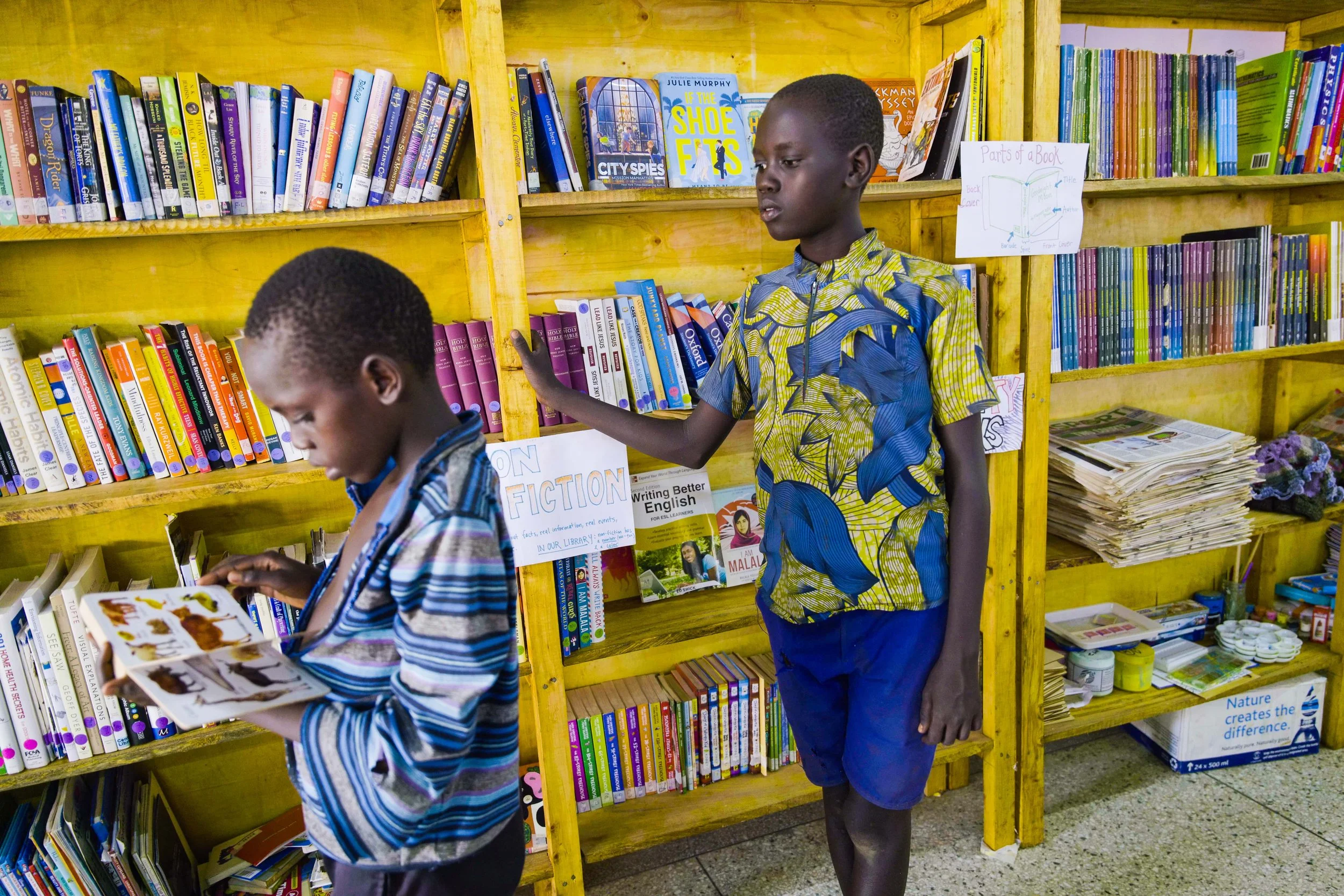
When most people think about the African Library Project, they picture boxes of lovingly donated books heading across the ocean. And that is certainly part of the magic — but it’s not the whole story.
Every ALP library begins with donated books — and is strengthened by the tools and training that help communities bring those books to life.
This truth came into sharp focus as I learned more about the work happening in the Imvepi and Rhino Refugee Settlements in Uganda, where two visionary leaders — Lulu (Luyao Tian) and Peter, both part of Creative Learning Haven (CLH) — are helping shape community-led libraries grounded in partnership and local leadership. CLH’s work in these settlements is implemented by Hope Rising South Sudan (HoRiSS) and the Youth Social Advocacy Team (YSAT) Uganda, with collaboration from community members across both sites. Together, they’ve helped create two vibrant, community-driven libraries that reflect what becomes possible when local vision is paired with the right tools, training, and support from the very beginning.
But these libraries didn’t begin with spacious buildings or large collections.
They began with community need, thoughtful planning, and the desire to create learning spaces that could grow with — and be shaped by — the people of Imvepi and Rhino.
That’s where the ALP Library Manual became a key resource. The resource was used to help develop staff training materials, shape early systems for cataloging and organizing books, and introduce a simplified, color-coded version of the Dewey Decimal System that made library access possible for learners of all ages — especially in a context where schools themselves often lacked any formal system for categorizing books.
A Manual That Becomes a Blueprint for Autonomy
Lulu shared that as Creative Learning Haven was getting started, she used the ALP Library Manual to help develop staff training materials and introduce foundational systems for cataloging and organizing books. The team built their book-tracking and color-coded Dewey Decimal system directly from the manual’s guidance, giving library staff and community members the skills to navigate and manage their collections confidently.
Introducing Dewey meant:
Children could browse independently
Women attending literacy classes could find materials without asking
Teachers could locate academic resources quickly
Students could explore topics — from entrepreneurship to mental health — on their own terms
Lulu put it beautifully:
“Anybody who enters the library learns how to find books according to how they’re organized.”
It’s a small detail on paper. But in practice, it is access.
Libraries That Emerge From Listening
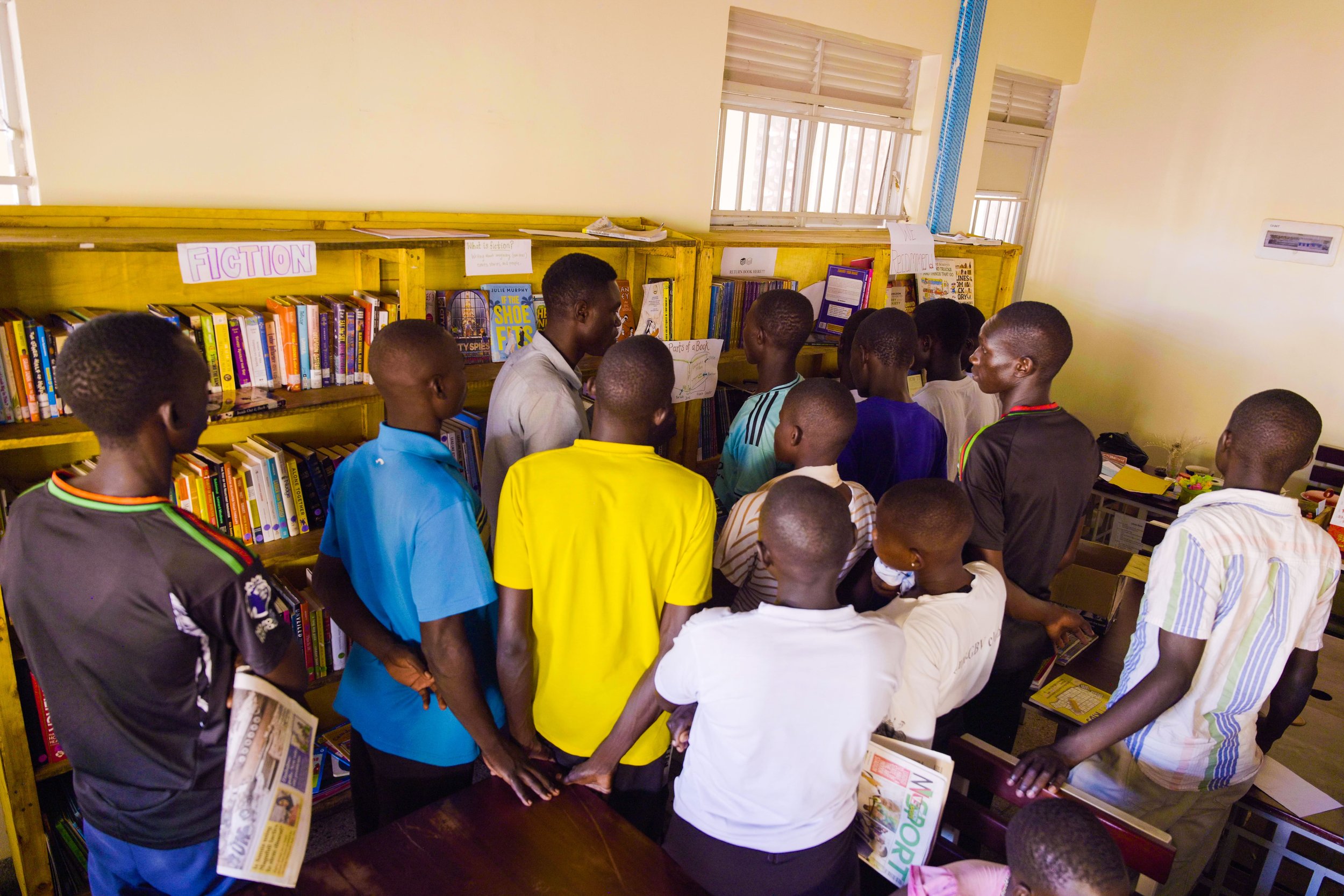
Both the Imvepi and Rhino libraries grew from listening deeply to the community. When Creative Learning Haven first opened its doors, young artists immediately began using the pencils and paper available, creating intricate sculptures and drawings — a moment that inspired the team to start a weekly drawing class based on their interests. As more people visited, the team noticed that many primary school students were eager to read, even though most could not yet read the words on the pages, which led to the creation of dedicated children’s literacy classes. The same pattern emerged with the women’s crafting group: women who attended weekly activities expressed the desire to build foundational reading skills, and a women’s literacy class soon followed.
Teachers also played a key role, lending their own academic books to strengthen the library’s offerings and introducing students to the space through courtesy visits. And to reach community members living farther away, the team expanded access by creating four mobile library locations, bringing reading and borrowing opportunities directly into remote neighborhoods.
Every activity, every system, and every corner of these libraries emerged from this kind of partnership. These are not just reading spaces — they are living, evolving community learning environments, shaped by the people who use them and the needs they express.
Why Libraries Matter Here
In refugee settlements— where formal education is often inconsistent, overcrowded, or interrupted — libraries offer something precious:
A chance to catch up academically
A safe space for out-of-school youth
A place where women rebuild confidence through literacy
A hub for creativity and storytelling
A source of emotional grounding during hardship
A pathway to empowerment and employment
Peter said it plainly:
“Education and literacy create autonomy… and this generation of refugees will determine the fate of South Sudan.”
The libraries they’ve created are not just rooms filled with books — they are seeds of a future where refugees lead, teach, build, and dream without limits.
The Work Ahead
Lulu, Peter, and their partners have extraordinary ambitions for the next 2–5 years:
Five stationary libraries
Twenty mobile libraries
A new community library in South Sudan
Expanded teacher-librarian training
Digital access through tablets and e-learning
Sustainable income streams like printing services
More job opportunities for local youth
Their vision is bold, necessary, and deeply aligned with ALP’s mission to create long-term, community-driven literacy change.
Read the Full Interview
The full conversation with Lulu and Peter is a powerful look into the heart behind this work — the challenges, the victories, and the dreams that fuel their libraries each day.
Learn more about the Creative Learning Haven: creativelearninghaven.org